What to expect from your first ceramics class at MUD
An honest guide for anyone who wants to try ceramics in Leblon with calm, technique, and clearer expectations about the process.
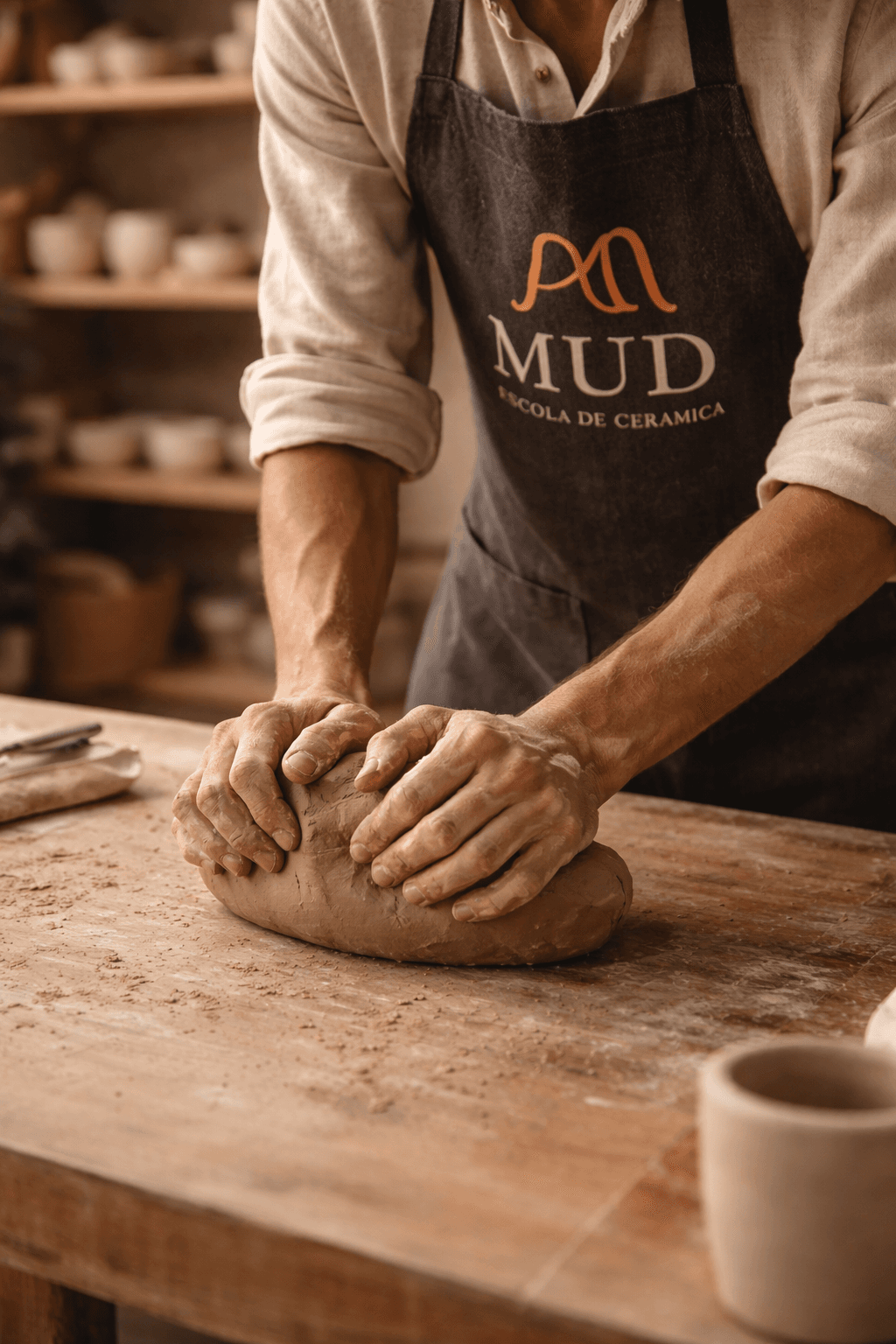
Starting ceramics often comes with a good mix of curiosity and uncertainty. It is normal not to know exactly what will happen, how long a piece takes to become ready, or whether you are supposed to arrive with some manual skill already in place.
At MUD, the first class is designed to hold that beginning without flattening the experience. The goal is to introduce clay, the rhythm of the studio, and the logic of the process clearly enough for you to enjoy the practice from the start.
You do not need prior experience
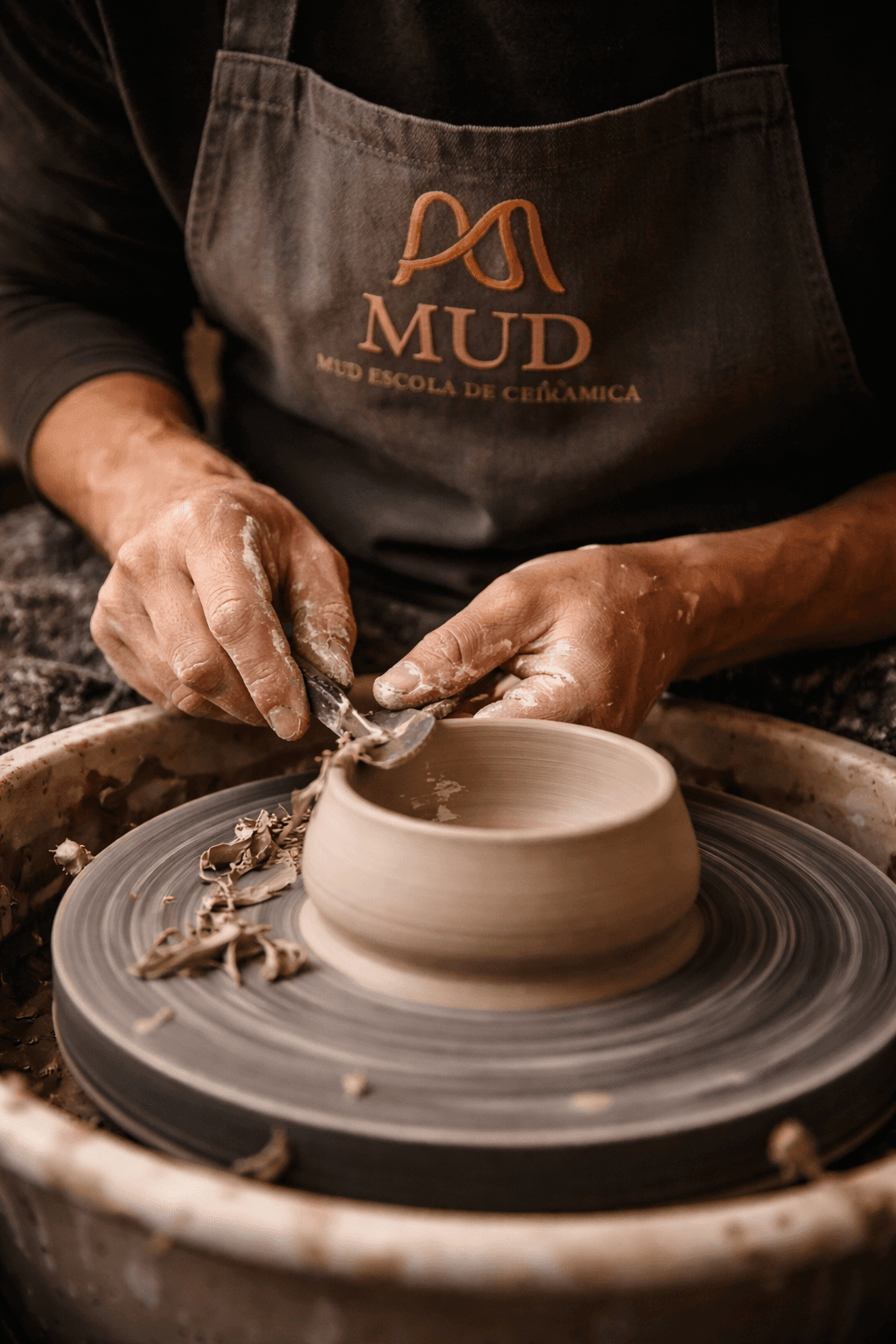
One of the most common questions is whether you need to have done ceramics before. You do not. The school welcomes beginners and works carefully through the technical base, showing how clay responds to touch, moisture, pressure, and time.
That first contact already reveals something important: ceramics does not happen on autopilot. It asks for attention, listening, and repetition. That is part of what makes it so rewarding.
Your body understands before the piece is finished
In a first class, many people imagine an immediate final result. But what matters most at the beginning is noticing how the hands start learning. The piece appears gradually, and so does the relationship with the material.
In practical terms, you will usually:
- get to know basic tools and work surfaces;
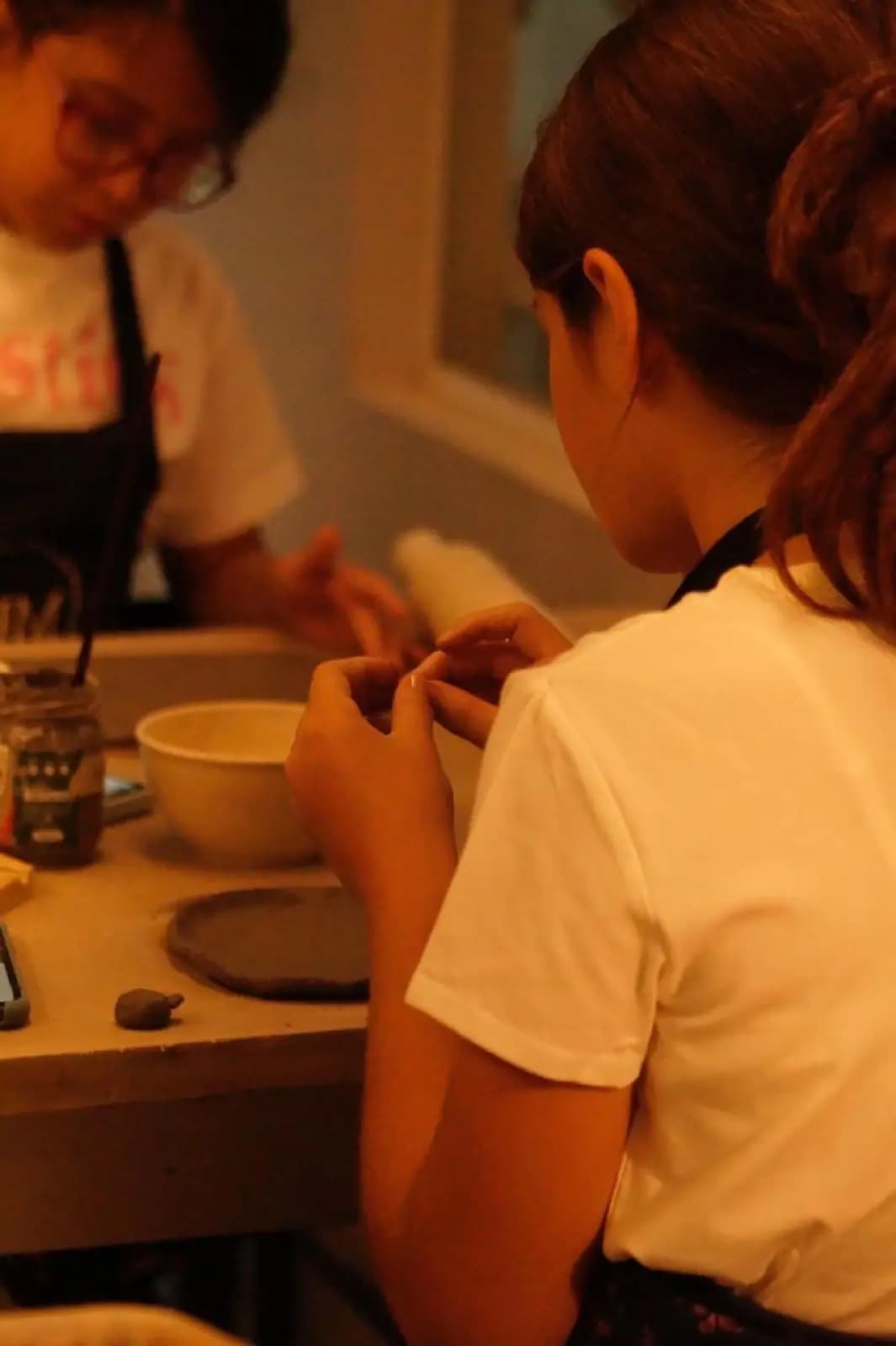
- try one or more handbuilding methods;
- understand why drying and firing are part of the experience;
- leave with a much clearer idea of what learning ceramics actually involves.
Ceramic time is part of the lesson
Not every piece is ready to take home the same day. Clay needs time to dry, move through the kiln, and sometimes return for later finishing. That interval is not a hidden inconvenience. It is part of the language of ceramics.
At MUD, that timing is explained with transparency and care so expectations stay grounded from the beginning. Instead of frustration, the aim is to build familiarity with a process that is naturally slow.
Is a one-off class worth it?
For many people, yes. A one-off session can be a strong entry point to feel the atmosphere of the studio and understand whether you want to continue in a more regular path.
If you do want to go further, MUD also offers the ceramics ABC, an 8-class foundation cycle focused on technique, material research, and creative autonomy.
If you want help finding the best format, the quickest path is to message the studio on WhatsApp and describe what you are looking for.